

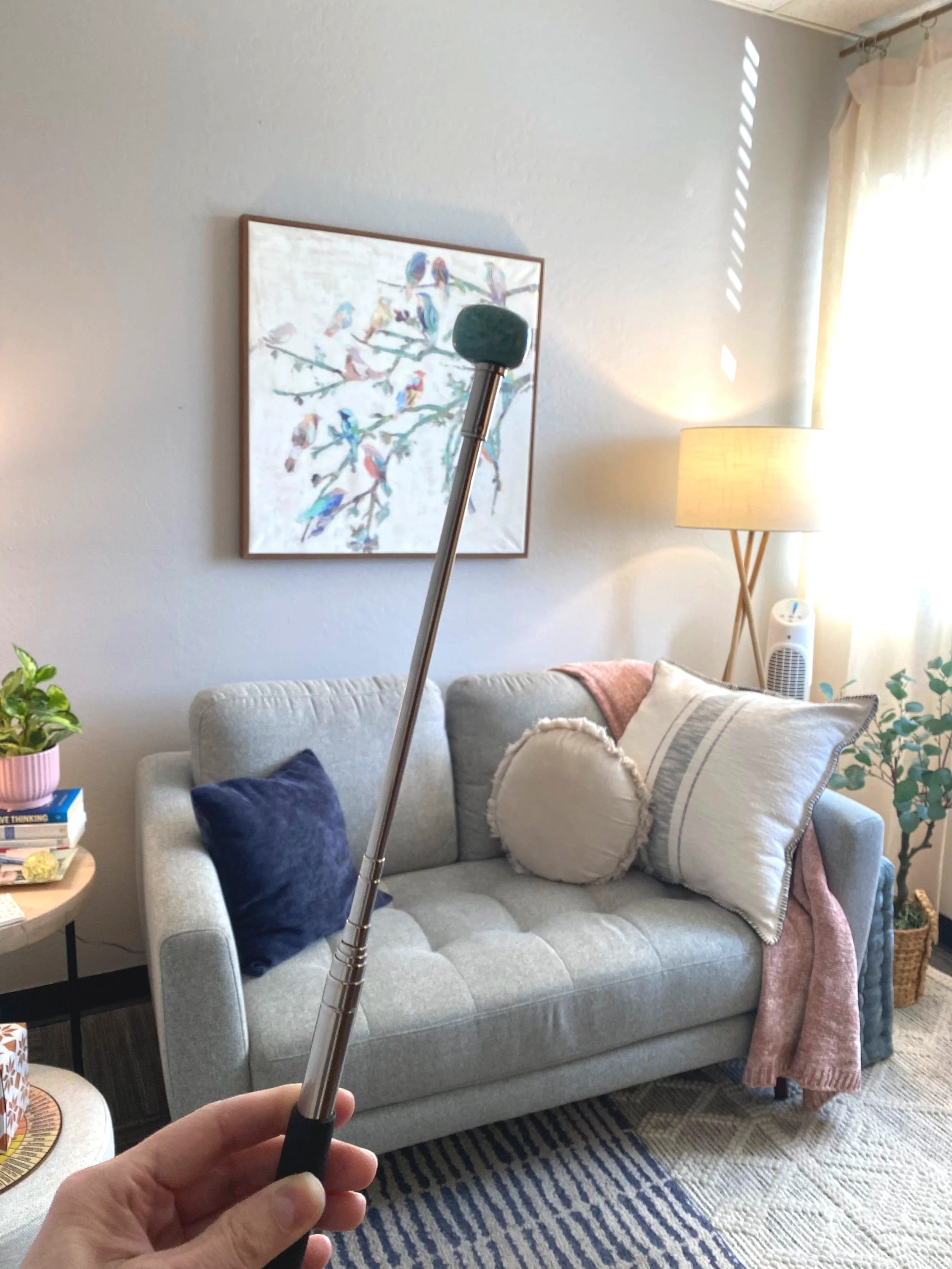
Consider Brainspotting Therapy for Anxiety, Trauma, Grief, Infertility & Deeply Personal Challenges
Have you ever felt like you've been running an internal pattern? Perhaps you know what the issue is, or you know what you need to do, but you just can't seem to move past it?
From my experience as a Brainspotting practitioner, many of my clients enter therapy with great personal insight. They've often experienced some progress through traditional talk therapy, too. But something still feels unresolved.
I frequently hear, "I know what to do, or what I should do, but it's so hard for some reason. I just feel stuck!"
In some instances, they've read the books, journaled, meditated, or pursued yoga and acupuncture (all worthy and wonderful things that I personally engage in myself!). And yet, despite all of these efforts, something still feels missing. Something hasn't quite clicked, released, or felt resolved within.
This is where Brainspotting Therapy may offer a different path to healing, particularly if you've already explored traditional therapeutic approaches and are looking for something beyond talking and analyzing. Brainspotting works with the brain and body to help process unresolved experiences and engage the nervous system in a deeper way.
I find this approach fascinating, and I regularly witness clients experiencing meaningful shifts through this work.
As a Mesa counselor specializing in a holistic, mind-body approach to trauma, anxiety, grief, and infertility-related concerns, I work with individuals who sense there is something deeper within them seeking attention, healing, and resolution.
Brainspotting Therapy is a brain-body therapeutic approach that can help access and process experiences beyond conscious awareness, creating opportunities for meaningful emotional relief and change. It has genuinely changed the way I see what's possible in the healing process—and what I see possible for my clients.
What Is Brainspotting Therapy?
Brainspotting is a somatic (body-centered) therapeutic approach developed by Dr. David Grand. It uses specific eye positions, known as "brainspots," to help identify and process unresolved emotional experiences.
Brainspotting's guiding principle is simple:
Where you look affects how you feel.
In slightly more scientific terms: Certain eye positions appear to be associated with deeper neurological and emotional processing. Brainspotting uses these positions, along with focused awareness, to help clients connect with experiences that may be held outside of conscious awareness.
In essence, the visual system is connected to areas of the brain involved in emotional processing and the body's responses. Brainspotting uses this connection as part of a therapeutic process that engages both the brain and body.
What Happens in a Brainspotting Session?
In my Brainspotting sessions, I incorporate gentle bilateral sound (calming music that alternates between both ears) to support the processing experience.
Together, we'll identify a brainspot—a particular place in your visual field that connects with a sensation, emotion, or memory you'd like to work through.
You'll then be invited to maintain your gaze while mindfully noticing what arises internally. This might include physical sensations, emotions, memories, thoughts, or simply subtle shifts in awareness.
Rather than directing or analyzing the experience, we allow the brain and nervous system to engage in their own processing. This can create opportunities to work through trauma, anxiety, grief, and limiting beliefs while supporting greater nervous system regulation.
Every person's experience is different. Some sessions feel deeply emotional, while others are quiet, subtle, or even surprising. There is no right or wrong way to experience Brainspotting.
Do You Have to Talk During Brainspotting?
Not at all!
Unlike traditional talk therapy, Brainspotting doesn't require you to talk through or explain the details of what happened to you, or fully understand why you feel the way you do.
Instead, it creates space for the brain and body to process experiences naturally, gently, and at a pace that feels safe and manageable.
We'll gather just enough information to understand what you're hoping to work through—and that's it. You don't need to tell your entire story or revisit every painful detail.
One of the benefits of Brainspotting Therapy is that it can allow you to maintain a sense of privacy while working through emotional pain.
How Will I Feel After a Brainspotting Session?
Many of my clients describe their Brainspotting sessions as transformative, enlightening, and relieving.
"After the session, I didn't even think about the problem. Something had shifted."
Or, "I didn't realize how many layers were involved with this issue. Brainspotting helped me get closer to the core of why I was feeling the way I did."
Some clients leave feeling lighter, calmer, or clearer, reporting they feel more "inner capacity" to connect to themselves and their environment. Others notice their experience continues to unfold over the following days. And sometimes, a session can bring up emotions or sensations that need a little time and attention afterward.
There is no single expected outcome. The process is personal, and we make space for whatever emerges.
In a Nutshell
With Brainspotting Therapy, there's less "figuring things out" through talking, analyzing, and trying to make connections happen.
There's more allowing the mind and body to process what they've been carrying, in a safe and supportive environment, creating opportunities for greater relief and resolution.
Healing isn't about finding another answer through talking and analyzing. I like to believe healing is a process of allowing, which is at the heart of Brainspotting.
Is Brainspotting Right for You?
Brainspotting may be beneficial if:
You feel stuck despite years of insight and self-awareness work.
Traditional talk therapy has helped, but not as much as you had hoped.
You struggle with anxiety, trauma, grief, or chronic stress.
You feel disconnected from your body or emotions.
You are navigating infertility, reproductive loss, or other deeply personal challenges.
You are seeking a therapeutic approach that honors the connection between mind and body.
You sense there is something deeper that you haven't quite been able to access through words alone.
Finding Brainspotting Therapy in Mesa and Phoenix, Arizona
I often tell my clients that healing isn't fixing, and fixing isn't healing.
The healing process is about creating space for your nervous system to work through the stories, events, and experiences of the past so you can live, breathe, and connect more fully, vibrantly, and freely in the present.
At Calm Hearts Counseling in Mesa, Arizona, Brainspotting Therapy is integrated into a compassionate, holistic approach to counseling that recognizes the wisdom and interconnectedness of both the mind and body.
Whether you're struggling with anxiety, grief, infertility, trauma, or simply feel ready to explore a deeper approach to healing, Brainspotting may offer a pathway toward greater calm, clarity, and emotional freedom.
If you're looking for a Brainspotting therapist serving Mesa, Chandler, Gilbert, Tempe, Scottsdale, and Phoenix, I'd love to connect. Feel invited to contact me.
You don't have to keep figuring everything out on your own! There may be another way forward, like Brainspotting Therapy.
Come Home to Calm.
With heart,
Christine
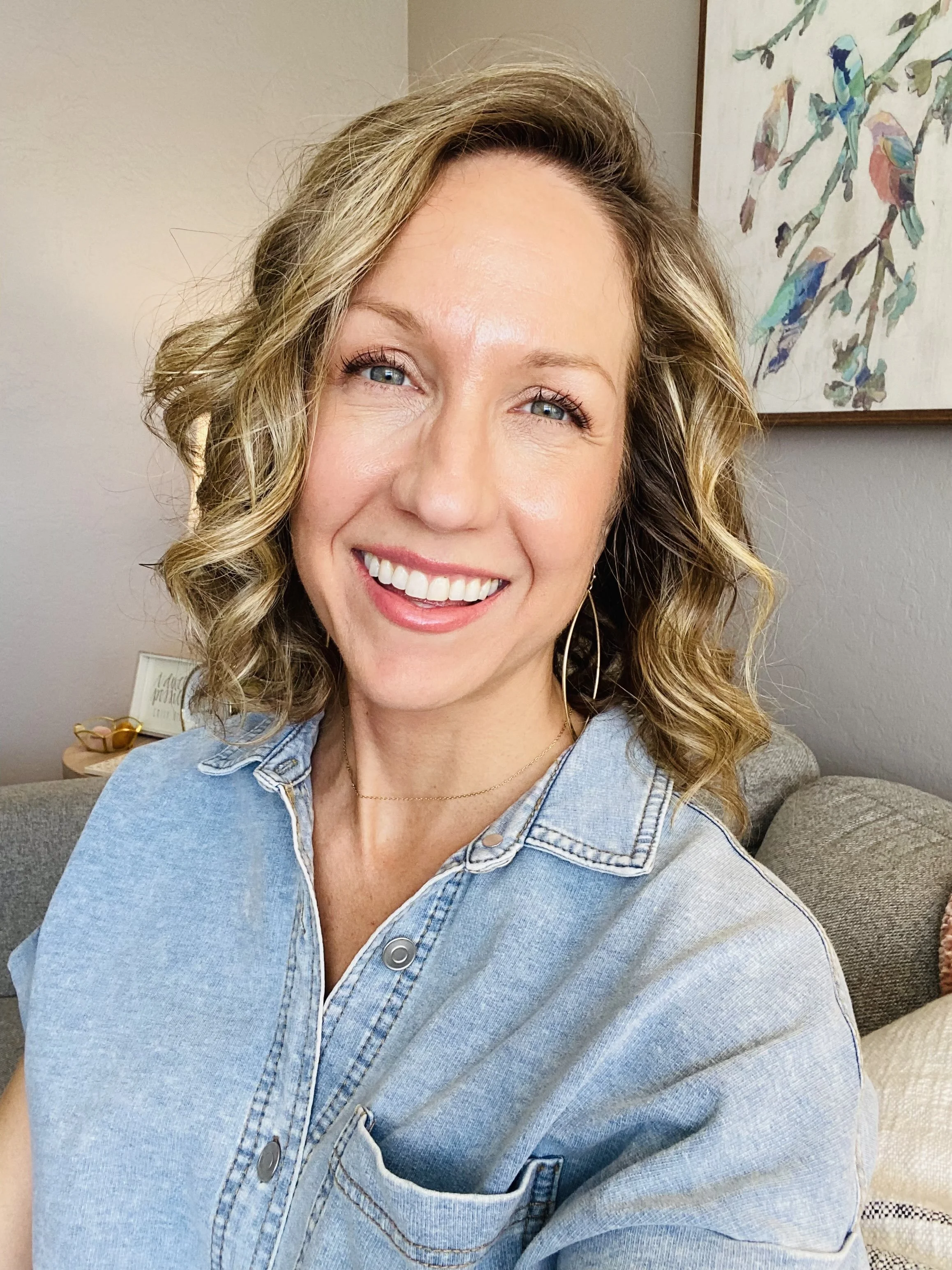
Hi, I’m Christine Slomski, a Licensed Professional Counselor, Brainspotting & EMDR Therapist, EFT Tapping Practitioner & Reproductive Trauma & Grief Specialist in Mesa, Arizona. I’d love to help you come home to Calm.
In-person & virtual counseling services for Mesa, Gilbert, Chandler, Tempe, and Arizona statewide.
Online counseling services for Boise, Meridian, Eagle and Idaho residents statewide.